Neurodivergent Screening: Questions, Free Tests, and Next Steps for Adults
Neurodivergent screening can be a useful first step when you feel that your attention, sensory experience, learning style, communication, or daily routines do not quite match what people around you seem to expect. It is not a medical conclusion, and it should not be treated as proof of any single condition. A good screening process helps you notice patterns, organize your questions, and decide whether a professional conversation would be helpful. If you want a private starting point, a free neurodivergent self-screening tool can support reflection before you choose any next step.

What Neurodivergent Screening Actually Means
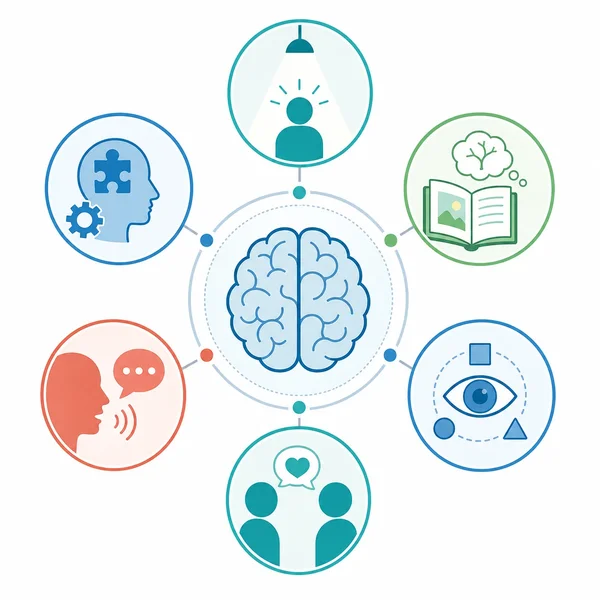
Neurodivergent screening is a structured way to look for patterns that are often associated with neurodevelopmental differences. It may ask about attention, sensory sensitivity, social communication, routines, learning, emotional regulation, and energy after everyday demands.
The word "screening" matters. A screen is not the same as a full clinical assessment. It is closer to a map of possible areas to explore. It can suggest that certain traits may be worth reading about, tracking, or discussing with a qualified professional, but it cannot fully explain your history, environment, culture, mental health, school experience, or support needs.
This distinction is especially important because neurodivergence is an umbrella idea. People use it to describe many kinds of brain-based differences, including autism, ADHD, dyslexia, dyscalculia, dyspraxia, Tourette syndrome, sensory processing differences, language and learning differences, and overlapping profiles such as AuDHD or twice-exceptional experiences. Not every person uses the same labels, and not every trait points to the same explanation.
A helpful screen should leave you with better questions, not pressure. You might come away thinking, "I notice sensory overload more often than I realized," or "My attention changes depending on interest and task structure." That kind of insight can be valuable even when it does not lead to a formal assessment.
Neurodivergent Screening Questions You May See
Many neurodivergent screening tests use practical questions about patterns across daily life. The wording varies, but strong screening questions usually focus on repeated experiences rather than one-off bad days. They also ask about both challenge and context.
Common screening areas include:
- Attention and task initiation: Do you often struggle to begin tasks, switch tasks, estimate time, or stay focused unless something is urgent or deeply interesting?
- Sensory processing: Do sounds, lights, textures, smells, or crowded places drain you more than they seem to drain other people?
- Social communication: Do you often miss implied meaning, rehearse conversations, prefer direct language, or feel tired after social masking?
- Routines and transitions: Do sudden changes, unclear plans, or interruptions feel harder than people expect?
- Learning and language: Have reading, spelling, writing, numbers, instructions, or classroom-style learning felt unusually difficult despite effort?
- Emotional regulation: Do rejection, criticism, uncertainty, or overwhelm produce reactions that feel intense or hard to reset from?
- Strengths and interests: Do you experience deep focus, strong pattern recognition, creative problem solving, unusual memory for details, or intense curiosity?
If you use an anonymous screening experience, answer based on your usual pattern over time, not the most stressful week of your life. It can help to think about childhood, school, work, relationships, and home routines separately. Some adults only recognize patterns after a job change, parenting, burnout, university, or a relationship shift makes old coping strategies harder to maintain.
How to Read Free Neurodivergent Test Results Carefully
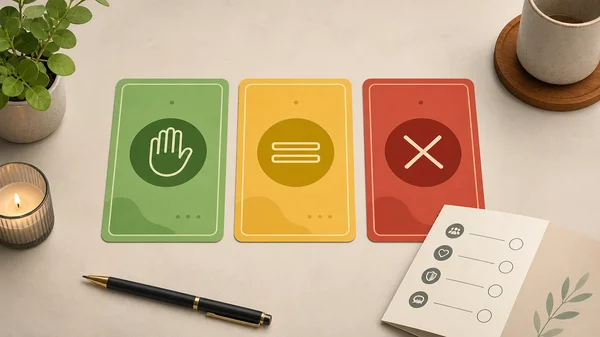
Searches for a neurodivergent test free, a neurodivergent test free no email, or a neurodivergent test with free results usually come from a very understandable place: people want privacy, speed, and a low-pressure way to make sense of themselves. That is reasonable. The caution is that a free result should be treated as a reflection aid, not a final answer.
When reading results, ask three questions.
First, what patterns did the screen highlight? A result that points toward sensory sensitivity is different from one that points toward executive function, masking, or learning differences. The category matters more than the emotional punch of the score.
Second, how much do these patterns affect daily life? Many people relate to some neurodivergent traits. The next question is whether the pattern repeatedly affects work, study, communication, relationships, health, or basic routines.
Third, what else could explain the same experience? Sleep loss, anxiety, trauma, depression, chronic stress, grief, burnout, medication effects, and medical issues can overlap with neurodivergent traits. This does not make your experience less real. It simply means a careful interpretation should stay open.
A simple action step is to create a three-column note:
| Pattern I noticed | Where it shows up | Support or question to explore |
|---|---|---|
| Sensory overwhelm | Grocery stores, office noise | Try quieter shopping times; ask about sensory processing |
| Task switching difficulty | Email, chores, work admin | Use transition timers; track when it is worst |
| Social exhaustion | Meetings, family events | Compare masking, recovery time, and communication needs |
This turns a screening result into usable self-knowledge instead of a label chase.

Neurodivergent Screening for Adults, Women, and NHS Searches
Adult neurodivergent screening often looks different from childhood screening. Adults may have years of coping strategies, masking, avoidance, perfectionism, or overwork layered on top of their traits. A person who did well in school may still struggle with sensory load, time management, transitions, or social recovery. A person who looks organized at work may be using enormous private effort to stay afloat.
Women, non-binary people, and people from under-recognized backgrounds may also relate to screening questions differently. Some have been rewarded for being quiet, compliant, helpful, or socially observant, which can hide internal effort. Others may have had their traits framed as anxiety, sensitivity, laziness, moodiness, or personality before anyone considered neurodivergence.
Searches such as neurodivergent test NHS or neurodivergent test free NHS need careful interpretation. In the UK, NHS routes usually involve condition-specific pathways, such as autism or ADHD assessment routes, rather than one single all-purpose online neurodivergent screening test. Access can depend on local services, GP referral processes, age, impact on daily life, and the type of concern. Dyslexia assessment may follow different educational or specialist routes.
If you are in the UK and your screening reflections raise practical concerns, it may help to write down examples before speaking with a GP, school, university support service, workplace occupational health team, or another appropriate professional. Bring concrete patterns: when they started, where they show up, what support you have already tried, and how they affect daily life.
What Neurodivergent People May Struggle With
Neurodivergent people do not all struggle with the same things. The better question is: which environments fit this person well, and which environments create friction?
Common areas of friction can include:
- Executive function demands, such as starting, planning, prioritizing, remembering, or finishing tasks
- Sensory load from sound, light, smell, texture, temperature, crowds, or movement
- Social decoding, especially indirect hints, fast group conversations, sarcasm, or unclear expectations
- Transitions between activities, places, roles, or plans
- Emotional intensity, especially after criticism, conflict, rejection, uncertainty, or overload
- Learning systems that reward speed, handwriting, rote memory, or long verbal instructions
- Burnout after long periods of masking or forcing a "normal" presentation
These struggles are real, but they are not the whole story. Many neurodivergent people also describe strong pattern recognition, honesty, creativity, deep focus, intense empathy, original problem solving, memory for detail, strong justice orientation, or unusual persistence. Strengths and support needs can exist at the same time.
That is why screening should not ask only, "What is wrong?" A better screen asks, "What patterns are present, what contexts make them easier or harder, and what supports might help?"
How to Choose the Best Neurodivergent Screening Test
The best neurodivergent test for self-reflection is not the loudest quiz or the one with the most dramatic result page. It is the one that respects uncertainty, explains limitations, protects privacy, and helps you think clearly.
Before using a screening tool, look for these qualities:
| What to check | Why it matters |
|---|---|
| Clear non-clinical framing | A screen should not pretend to replace a professional assessment |
| Plain-language questions | You should understand what each question is asking |
| Multiple trait areas | Neurodivergence is broader than one stereotype |
| Privacy-friendly access | Free, no-email options reduce pressure for early exploration |
| Balanced results | Helpful results name patterns without making absolute claims |
| Next-step guidance | The tool should suggest reflection, support, and professional input when needed |
Be cautious with any test that promises certainty, uses fear-based language, sells a single solution for everyone, or treats neurodivergence as something that must be fixed. Also be cautious if every result pushes you toward the same paid offer.
For a more grounded experience, take the screen when you are not rushed. If possible, answer once from your current adult life and then review whether the same patterns appeared earlier in school, family life, friendships, or first jobs. Patterns across time are often more useful than a single score.
Use Neurodivergent Screening as a Calm First Step
Neurodivergent screening works best when it gives you language for your experience without forcing you into certainty. You might use your results to notice sensory needs, experiment with routines, prepare for a professional conversation, or simply understand why some environments have always felt harder than others.
If you want a private place to begin, the neurodivergent reflection tool can help you organize your thoughts and consider what to explore next. Keep the result in perspective: it is a starting point for self-awareness, not a final identity decision or clinical conclusion.
From there, choose the next step that fits your life. That might be reading more, tracking patterns for a few weeks, trying practical supports, talking with someone you trust, asking for adjustments, or seeking a qualified assessment if your traits are affecting daily functioning. The goal is not to prove that you are "neurodivergent enough." The goal is to understand yourself with more accuracy, compassion, and useful language.
FAQ
What are the 11 types of neurodivergence?
There is no single universal list of exactly 11 types of neurodivergence. Many educational articles group examples such as autism, ADHD, dyslexia, dyscalculia, dysgraphia, dyspraxia, Tourette syndrome, sensory processing differences, language differences, learning differences, and twice-exceptional profiles. The exact list depends on the source and purpose.
What is neurodivergent screening?
Neurodivergent screening is a structured self-reflection process that looks for patterns often associated with neurodevelopmental differences. It can help you notice traits, prepare questions, and decide whether more support or a professional assessment would be useful.
Is there a free neurodivergent test?
Yes, free neurodivergent screening tools exist. A free test can be helpful for private reflection, especially if it gives clear results without requiring an email. It should still be treated as an educational tool rather than a clinical answer.
Can a screening test tell me if I am autistic or have ADHD?
No online screen can fully answer that. Autism, ADHD, dyslexia, and other neurodevelopmental differences require careful professional assessment when a formal answer is needed. Screening can help you gather examples and decide whether that step makes sense.
What do neurodivergent people struggle with?
Some neurodivergent people struggle with executive function, sensory overload, transitions, social decoding, learning systems, emotional regulation, or burnout from masking. Others may need little support in some areas and significant support in others. Individual context matters.
What should I do after a high screening result?
Write down the patterns that stood out, where they affect daily life, and what support you have tried. You can then read more, experiment with practical changes, talk with someone you trust, or bring your notes to a qualified professional if the patterns are causing ongoing difficulty.