Gifted and Neurodivergent: Understanding the 2e Profile
You may often feel a lingering sense of paradox—a feeling that you are simultaneously "too much" and "not enough." You might recall breezing through complex academic concepts in school, yet today, you find yourself overwhelmed by the logistics of paying a utility bill. This internal tug-of-war is often the reality of being gifted and neurodivergent.
Also known as "twice-exceptional" or "2e," this profile describes individuals who possess high intellectual ability alongside neurodivergent traits such as ADHD, autism, or learning differences. If you have spent years wondering why your high potential doesn't always translate into smooth performance, understanding this intersection is the first step toward relief.
This guide explores the unique landscape of the gifted neurodivergent experience, looking beyond labels to understand how your brain works. While this content is for educational purposes and not medical advice, our neurodivergent screening tool can help you organize your observations and explore where you might stand on this spectrum.
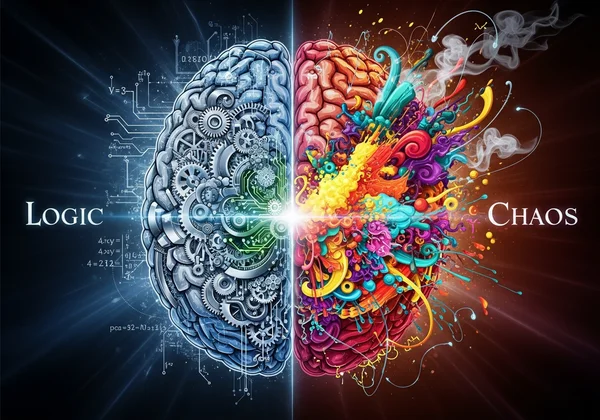
What Defines a "Gifted and Neurodivergent" (2e) Person?
To grasp the full gifted neurodivergent meaning, we must first dismantle the myth that high intelligence acts as a shield against developmental challenges. In the past, educators and psychologists often assumed that "gifted" people could not have learning disabilities. We now know that these traits frequently coexist.
Understanding Asynchronous Development
The defining feature of the twice-exceptional (2e) experience is "asynchronous development." In a neurotypical trajectory, intellectual, emotional, and physical skills tend to develop at roughly the same pace. For a gifted neurodivergent person, these timelines are often wildly out of sync.
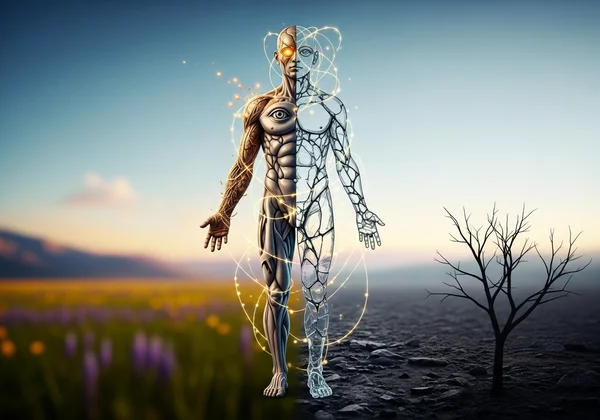
You might possess the reasoning capabilities of a philosopher but the emotional regulation of someone much younger during times of stress. This asynchrony creates the internal friction many 2e adults feel daily. You can conceptually understand complex systems, yet you might struggle to execute the simple, linear steps required to navigate them.
Why Intelligence Does Not Cancel Out Disability
High intelligence does not "cure" neurodivergence; it often just masks it. A common misconception is that if you are smart enough, you should be able to "think your way out" of executive dysfunction or sensory overload.
In reality, your high IQ might allow you to compensate for challenges temporarily. You might use logic to decode social interactions or rely on last-minute hyperfocus to complete tasks. However, these strategies require immense energy. Being gifted and neurodivergent often means your struggles are invisible to others, leading to a lack of support and a private sense of failure.
The Intersection: Distinguishing Giftedness from ADHD and Autism
Untangling the threads of your cognitive profile can be difficult because gifted neurodivergent traits often mimic or mask one another. Determining whether your intensity is a sign of giftedness or hyperactive impulsivity requires careful observation.
The "Gifted Only" Profile vs. Neurodivergence
High intellectual ability comes with its own set of traits that can look like neurodivergence. Gifted individuals often display "over-excitabilities"—intense emotional, sensual, or intellectual responses to stimuli. They may be perfectionists or question authority deeply.
The distinction usually lies in the deficit. A gifted person may be bored by routine tasks but can complete them if necessary. A person with gifted neurodivergent adhd, however, may find themselves physically unable to initiate a boring task due to a lack of dopamine regulation, regardless of the task's simplicity.
The Overlap Zone: When It's Both (AuDHD)
When giftedness overlaps with autism and ADHD (sometimes called AuDHD), the picture becomes complex. You might have the autistic desire for routine and structure, conflicting with the ADHD need for novelty and stimulation. Your high intelligence acts as the mediator between these opposing forces.
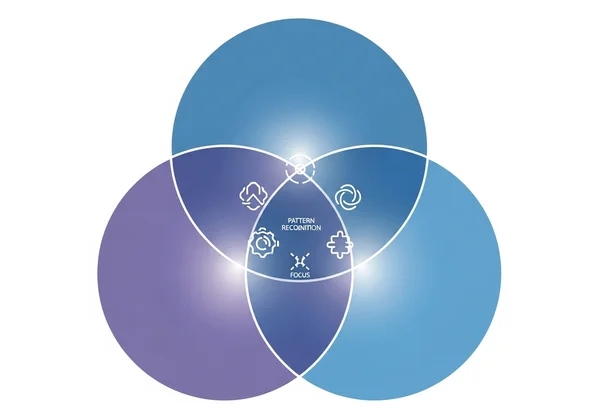
Common intersections include:
- Special Interests: Both gifted and autistic individuals dive deep into topics. The gifted neurodivergent brain often synthesizes these interests into complex, novel frameworks.
- Pattern Recognition: High IQ enhances the autistic ability to spot patterns, making 2e individuals exceptional problem solvers in specific niches.
Why 2e Adults Are Often Misdiagnosed by Professionals
Many gifted neurodivergent adults go undiagnosed because their high intelligence allows them to "mask" traits during short clinical appointments. A doctor might see a refined, articulate adult and dismiss the possibility of gifted neurodivergent autism or ADHD.
You might have learned to make eye contact intellectually rather than intuitively, or developed elaborate coping mechanisms to hide organizational chaos. Because you "seem fine" on the surface, your internal struggle is often invalidated.
Common Traits of Gifted Neurodivergent Adults
If you are reading this, you are likely looking for patterns in your own life. While every individual is unique, certain characteristics appear frequently among gifted neurodivergent adults.
High Intelligence vs. Executive Dysfunction
“I know exactly what I need to do. I have a perfect plan in my head. So why have I been sitting on the couch for three hours, unable to start?”
This gap between ability and output is a hallmark of the 2e experience. You possess high processing power but may struggle with the "executive" functions responsible for planning, prioritizing, and initiating tasks. This disconnect is often the greatest source of shame for gifted neurodivergent individuals.
Sensory Sensitivity and Emotional Intensity
Gifted neurodivergent traits often include a heightened nervous system. You might hear electricity humming in the walls or find it impossible to focus if a clothing tag is scratching your skin.
Emotionally, this sensitivity translates to intensity. You might feel the world more deeply than those around you. Global news can leave you paralyzed with grief, or a small criticism can trigger a disproportionate wave of shame, often related to Rejection Sensitive Dysphoria (RSD).
Social Anxiety and the "Alien" Feeling
Many gifted neurodivergent people report a lifelong feeling of being an "alien" or an observer of the human species. You might find small talk excruciatingly under-stimulating, preferring to jump straight to deep, philosophical discussions. This can lead to social isolation gifted neurodivergent adults often face—not because you dislike people, but because standard social scripts feel restrictive.
Bridge Module: Ready to Explore Your Cognitive Profile?
Do the contradictions above sound like your daily life? Do you feel a resonance with the idea of being highly capable yet strangely stuck?
It can be difficult to sort through these traits alone. To help you gain clarity, we have designed a screening tool that looks at these specific intersections. It is a safe, low-pressure way to see if your patterns align with neurodivergent traits.
Note: This screening is for educational and self-discovery purposes only and does not constitute a clinical diagnosis.
The Hidden Cost: Masking and Burnout
The most significant risk for gifted neurodivergent individuals isn't the neurodivergence itself—it is the exhaustion that comes from trying to hide it.

Identifying "Gifted Kid Burnout" in Adulthood
The internet is full of discussions about "gifted kid burnout," but this is a very real physiological state for adults. If you grew up being praised for being "smart," you likely internalized the belief that things should come easily to you. When you hit a wall—whether in college, parenting, or a corporate job—you may push yourself harder rather than asking for help.
Gifted neurodivergent burnout occurs when your coping mechanisms collapse. It is not just being tired; it is a state of total depletion where your brain refuses to mask any longer.
The Cycle of Masking and Fatigue
Masking is the conscious or unconscious suppression of your natural traits to fit in. For a 2e adult, this might look like:
- Forcing yourself to sit still in meetings when you need to pace to think.
- Feigning interest in topics to appear "polite."
- Obsessively checking emails to hide dyslexia or attention errors.
This constant performance drains your battery. You might hold it together perfectly at work, only to suffer a meltdown the moment you get home to your safe space.
Impact on Social Isolation and Relationships
The energy required to mask leaves little left for relationships. You might withdraw from friends because you simply cannot afford the "social tax" of interaction. This leads to increased social isolation, reinforcing the feeling that no one truly knows the real you.
Strategies to Support Your Unique Brain
Recognizing that you are gifted and neurodivergent allows you to shift from "fixing" yourself to supporting yourself.

Moving From Fixing to Accommodating
Stop trying to force your brain into a neurotypical mold. If you struggle with time blindness, use visual timers. If you have sensory issues, wear noise-canceling headphones without guilt. View these not as crutches, but as necessary ramps for your brain type.
Communicating Your Needs to Employers and Partners
You don't always need to disclose a diagnosis to get support. You can advocate for your working style.
- Instead of: "I have ADHD."
- Try: "I do my best deep work when I have a block of uninterrupted time in the morning. Can we schedule meetings for the afternoon?"
Finding Neuro-Affirming Professional Support
Standard talk therapy can sometimes fail 2e adults because they can "intellectualize" their feelings without actually processing them. Look for therapists who specialize in neurodivergence, "gifted trauma," or somatic approaches. They can help you dismantle the shame associated with your asynchronous development.
You Are Not Broken, Just Asynchronous
The journey of discovering you are gifted and neurodivergent is often emotional. There is grief for the years spent criticizing yourself, but there is also relief in finally having an explanation.
You are not broken, lazy, or "wasted potential." You are simply wired differently, with a developmental timeline that is unique to you. By understanding your traits, you can stop fighting your brain and start building a life that honors both your exceptional abilities and your very human needs.
If you are ready to start that journey of understanding, our free assessment is a great place to begin.
Frequently Asked Questions
Is giftedness considered a form of neurodivergence?
While not universally classified as a disability, many experts consider giftedness to be a form of neurodivergence. This is because the gifted brain processes information, sensory input, and emotions differently than the neurotypical brain.
Can you be intellectually gifted and still have a learning disability?
Yes. This is the definition of "twice-exceptional" (2e). A person can be highly gifted in verbal reasoning but have dyslexia, or have a superior IQ but struggle with the executive functions required for writing or math due to ADHD.
Do I need a formal diagnosis to validate my experience?
A formal diagnosis can be helpful for legal accommodations in university or workplace settings, but it is not required for self-understanding. Many adults use self-education and screening tools to validate their experiences and make positive life changes without the expense of a neuropsychological evaluation.
What are the indicators that I might be gifted and neurodivergent?
Common indicators include a history of being "smart but scattered," intense interests or hobbies, sensory sensitivities, strong verbal abilities mixed with organizational struggles, and a feeling of being consistently out of step with peers.
Why is twice-exceptionality often missed in adults?
It is missed because high intelligence allows adults to compensate for their deficits. They mask their struggles, work longer hours to catch up, or rely on partners to manage daily logistics, making the neurodivergence invisible to the outside world until burnout occurs.