DSM-5 Autism Self-Assessment: Evaluating Your Traits and Next Steps
For many adults, realizing that they might be neurodivergent doesn't happen in a doctor's office. It often begins late at night, scrolling through social media, reading an article, or watching a video that perfectly describes a lifelong, unspoken feeling of being "different." This spark of recognition frequently leads people to search for a dsm-5 autism self-assessment.
However, reading the Diagnostic and Statistical Manual of Mental Disorders (DSM-5) can feel overwhelming. It is a clinical book written for medical professionals, often using language that focuses on "deficits" rather than lived experiences. If you are questioning your neurotype, understanding what the DSM-5 actually means—and how it applies to your real life—is a crucial first step toward self-discovery and empowerment.
Understanding Autism Spectrum Disorder Through the DSM-5
The DSM-5 serves as the gold standard that psychologists and psychiatrists use to diagnose autism globally. In its latest revision, the manual combined several previously separate diagnoses (like Asperger's syndrome and pervasive developmental disorder not otherwise specified) into a single, comprehensive category: Autism Spectrum Disorder (ASD).
To provide a framework, the manual looks at an individual's behavior and development history to identify specific patterns. But what exactly do these clinical terms mean for an everyday person trying to understand their own mind?
The Core DSM-5 Diagnostic Criteria for Autism
When looking for a dsm-5 autism criteria adult self assessment, you will find that the clinical guidelines are broken down into two main domains. To meet the criteria for autism, an individual must experience traits in both areas:
- Persistent Differences in Social Communication and Social Interaction: In clinical terms, this is often labeled a "deficit" in the neurotypical flow of conversation. In real life, it might look like not knowing when it's your turn to speak, finding small talk exhausting or pointless, struggling to maintain or understand the purpose of eye contact, or feeling like you are constantly "acting" to fit in during social gatherings.
- Restricted, Repetitive Patterns of Behavior, Interests, or Activities (RRBs): This covers a wide range of traits. It includes needing strict routines to feel safe and experiencing severe distress when plans change. It also includes having intense, highly focused passions (special interests) and engaging in repetitive physical movements to self-soothe (often called "stimming," like hand-flapping or rocking). Furthermore, this category includes hyper- or hypo-reactivity to sensory input—such as being physically pained by bright lights, tags in clothing, or loud environments.
How DSM-5 Autism Traits Look in Adults vs. Children

A common frustration for those seeking answers later in life is that traditional medical examples are heavily skewed toward young boys. An adult's presentation of autism is often much more subtle because they have spent decades learning how to survive in a neurotypical world.
Non-Linear Presentations: Burnout and Masking
Many adults fly under the diagnostic radar due to a survival mechanism known as "masking" or "camouflaging." This happens when an autistic person consciously or subconsciously suppresses their natural neurodivergent traits to blend in.
For instance, an adult might force themselves to make painful eye contact, suppress the urge to stim, or diligently script conversations in their head before speaking. While masking helps individuals navigate school or the workplace, it takes an immense toll on their mental energy, frequently leading to severe autistic burnout. This is why a specific female autism checklist dsm-5 or an autism masking checklist pdf has become so popular; women, marginalized genders, and people of color are historically more pressured to mask, leading to higher rates of missed diagnoses.
The Role of a DSM-5 Autism Self-Assessment
It is vital to state clearly: online quizzes and questionnaires cannot provide a formal medical diagnosis. You cannot definitively diagnose yourself with autism using only a checklist.
So, why take one? An online screening tool is best viewed as a compass. It helps you organize your thoughts, validate your lifelong experiences, and translate your daily struggles into recognizable patterns. When you take a self-assessment, you are not attempting to bypass medical professionals; you are gathering the self-knowledge and vocabulary needed to advocate for yourself if you eventually seek professional evaluation.
Taking the Next Step: Try a Neurodivergent Screening Test
Reading through rigid medical criteria can feel isolating. If you suspect you might be on the spectrum, or if you simply feel that your brain processes the world uniquely, you need a screening tool that is accessible, empathetic, and affirming.
It can be overwhelming to read clinical criteria. If you want a more guided, accessible look at your traits, try our fast, 10-question situational evaluation.
Take the Free Neurodivergent Test Now
Common Autism Assessment Tools (RAADS-R, AQ, and More)
As you explore, you will likely encounter several well-known online tests.
- The RAADS-R Autism Test: (Ritvo Autism Asperger Diagnostic Scale-Revised) A popular, extensive questionnaire designed specifically to identify adult autism, particularly in those who "escaped" diagnosis in childhood.
- The AQ Test: (Autism-Spectrum Quotient) A shorter, widely used 50-question screening tool that measures autistic traits in adults.
While these tools are valuable, they can sometimes feel overly clinical or intimidating due to their length and medical phrasing.
How Our Nuanced Test Differs from Traditional Methods
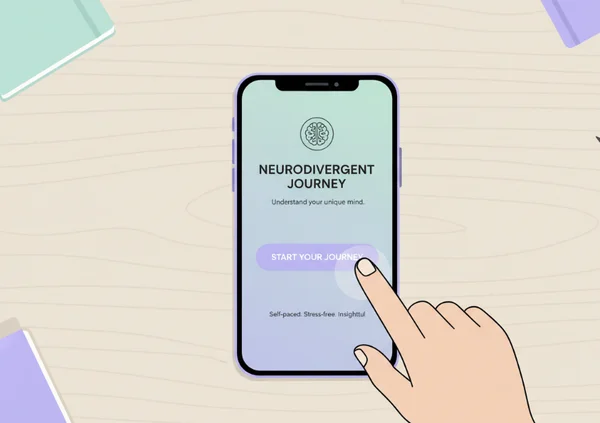
At Neurodivergent Test, we take a broader, more inclusive approach. Instead of a sterile clinical checklist, our 10-question neurodivergent screening test adults uses real-world scenarios. We embrace the broader term "neurodivergent" because we recognize that conditions like Autism, ADHD, and AuDHD frequently overlap. Our goal is not to pathologize you, but to highlight your unique perspectives and strengths alongside the challenges you face.
Ready to explore your unique neurological profile beyond a simple label?
Start Your Self-Discovery Journey
Frequently Asked Questions
What should I do if my self-assessment suggests I am neurodivergent?
First, take a deep breath. A high score on a self-assessment is not a cause for panic; for many, it brings immense relief and a sense of validation. Your next steps might include joining neurodivergent communities online (like specific subreddits or neurodiversity advocacy groups) to hear lived experiences, making sensory accommodations for yourself at home, and deciding if a formal diagnosis would be beneficial for your work, academic accommodations, or personal peace of mind.
How do you get a formal autism diagnosis as an adult?
Obtaining a formal adult diagnosis involves seeking an evaluation from a qualified mental health professional—typically a psychologist, psychiatrist, or neuropsychologist who specializes in adult neurodiversity. You can start by asking your primary care physician for a referral or searching for local clinics that explicitly state they evaluate adults for ASD.
Why is a female autism checklist different under the DSM-5?
While the core DSM-5 criteria remain the same for everyone, the presentation of those traits often differs by gender due to societal conditioning. Females are generally socialized heavily to be compliant, empathetic, and socially observant, forcing higher rates of autistic masking. Therefore, checklists focusing on female or high-masking presentations emphasize internal experiences (like social exhaustion, masked sensory overload, and internalized anxiety) rather than outward, stereotypic behaviors.
Disclaimer: The information provided in this article and the tests on NeurodivergentTest.org are for educational and preliminary self-exploration purposes only. They do not constitute a clinical diagnosis or medical advice. If you are seeking a formal diagnosis or experiencing significant emotional or mental distress, please consult a qualified healthcare or mental health professional.