Am I Neurodivergent Enough? Understanding Self-Validation
Have you ever found yourself wondering, "Am I really neurodivergent?" That nagging question echoes in the minds of so many of us who feel we experience the world differently. You might see stories on social media about ADHD or autism and feel a sense of recognition. Yet, this is often followed by a wave of doubt. You may wonder if your experiences are "enough" to count, especially when a formal diagnosis feels out of reach.
This article is for you. We will explore this common dilemma and discuss how self-validation can be a powerful tool for embracing your unique mind. The journey to self-understanding doesn't always require a medical label. Sometimes, it starts with a simple step of exploration. A great place to begin is by taking a free neurodivergent test to gain initial insights.
Redefining "Neurodivergent Enough" Beyond Medical Labels
The idea of being "neurodivergent enough" often comes from a misunderstanding of what neurodiversity truly is. It's not a club with strict entry requirements. Instead, it's a natural spectrum of human variation. Thinking of it as a simple yes-or-no question can be misleading and can invalidate your personal experiences.
The Spectrum Reality: Why Binary Thinking Fails Neurodivergence
Neurodivergence is not a binary state where you are either "neurodivergent" or "neurotypical." It exists on a wide spectrum. Many traits associated with conditions like autism or ADHD are present in the general population to varying degrees. For example, some people are highly sensitive to sound, while others are not bothered at all. This doesn't mean one person is "broken" and the other is "normal."
Thinking in black-and-white terms fails to capture the rich complexity of the human brain. Your unique combination of traits is what makes you who you are. The goal is not to fit neatly into a box but to understand the patterns of your own mind. Recognizing this can free you from the pressure of needing to be "enough" of anything.
Self-Discovery vs. Diagnosis: Different Paths to Self-Understanding
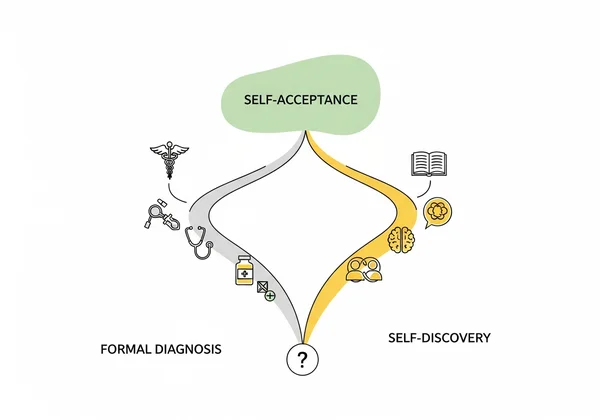
A formal diagnosis is a clinical process conducted by a healthcare professional. It can provide access to medical support, workplace accommodations, and a definitive label. For many, this path is affirming and necessary. However, it is not the only path to self-understanding.
Self-discovery is a personal journey of learning about your own mind. It involves reading, connecting with community experiences, and using tools to identify your traits. This process can be just as valid and empowering. It helps you develop a language to describe your experiences and find strategies that work for you, regardless of a formal label.
"Subclinical" Traits: When Your Brain Works Differently Without a Label
You may have several neurodivergent traits that are noticeable to you but don't meet the full criteria for a clinical diagnosis. These are sometimes called "subclinical" or "sub-threshold" traits. For instance, you might struggle with executive function but have developed effective coping mechanisms that mask the difficulty. Or you might have mild sensory sensitivities that you've learned to manage.
These experiences are real and valid. Having subclinical traits means your brain works differently, even if it doesn't fit a diagnostic manual perfectly. Acknowledging these traits can help you give yourself grace, find better support systems, and understand why you've always felt a bit "different."
The Neurodivergent Imposter Syndrome: Overcoming Self-Doubt
If you're exploring your neurodivergence, you might encounter a familiar feeling: imposter syndrome. This is the persistent doubt that you don't really belong, that your experiences aren't legitimate, or that you're just "making it all up." This feeling is incredibly common and can be a major barrier to self-acceptance.
Recognizing Imposter Syndrome in Neurodivergent Self-Exploration
Neurodivergent imposter syndrome often sounds like this: "I can make eye contact, so I can't be autistic." Or, "I did well in school, so I can't have ADHD." It thrives on stereotypes and a rigid view of what neurodivergence looks like.
This self-doubt is often fueled by a lifetime of "masking"—consciously or unconsciously hiding your neurodivergent traits to fit in. After years of pretending to be neurotypical, it can be hard to believe that your struggles are real. Recognizing these thoughts as a form of imposter syndrome is the first step toward overcoming them.
Common "Am I Really Neurodivergent?" Doubts and Their Origins
Many common doubts stem from misinformation or a lack of understanding. Some people worry they are just "lazy" instead of having executive dysfunction. Others fear they are just "anxious" or "weird" rather than genuinely neurodivergent.
These doubts often originate from societal pressure to conform. We are taught that there is a "right" way to think, feel, and behave. When we deviate from that norm, we may internalize the message that we are flawed. Understanding that your brain is simply wired differently—not incorrectly—is key to quieting these doubts. Taking a preliminary traits quiz can help you see your experiences as part of a larger pattern.
Validating Your Experience Without External Confirmation
You don't need anyone's permission to validate your own experiences. If learning about neurodiversity helps you make sense of your life, that is meaningful. If it gives you tools to improve your well-being, that is valuable. Your lived experience is the most important piece of evidence you have.
One way to build self-validation is to connect with neurodivergent communities online. Hearing stories from others who share your experiences can be incredibly affirming. It shows you that you are not alone and that your feelings are valid, with or without an official diagnosis.
Using Self-Assessment Tools as Your Starting Point
Self-assessment tools can be a powerful first step on your journey of self-discovery. They provide a structured way to reflect on your traits and see how they align with common neurodivergent profiles. These tools are not for diagnosis but for exploration and insight.
What Our Free Neurodivergent Test Can (and Cannot) Tell You
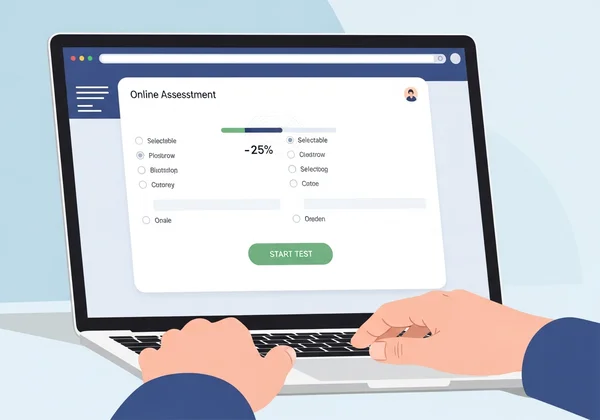
Our free neurodivergent test at NeurodivergentTest.org is designed to be a starting point. It consists of 10 scenario-based questions that help you explore tendencies related to social interaction, attention, and daily habits. It is a tool for self-reflection, not a clinical assessment.
What it can do: It can help you identify patterns in your thinking and behavior that may align with neurodivergent traits. The results can provide a new lens through which to view your life experiences and challenges. It can affirm your feelings and encourage you to explore further.
What it cannot do: It cannot provide a medical diagnosis of autism, ADHD, or any other condition. A formal diagnosis can only be given by a qualified professional after a comprehensive evaluation. Our test is a responsible first step, not the final word. To get started on your journey, begin the test now.
Interpreting Test Results: Patterns, Not Prescriptions
When you receive your results, it's important to view them as identifying patterns, not as a prescription for who you are. The outcome may suggest you lean toward a certain neurotype, such as ASD or ADHD. Use this information as a guide for further learning.
For example, if your results point toward ADHD-like traits, you might start reading about executive function. If they suggest autistic traits, you could explore topics like sensory processing or special interests. The goal is to use the results to fuel your curiosity and deepen your self-awareness.
Next Steps After Taking the Test: From Self-Awareness to Self-Acceptance
After taking the test, you have valuable information to guide your next steps. This is where the journey from self-awareness to self-acceptance begins. You can use this newfound insight to be kinder to yourself. Instead of criticizing yourself for struggling with certain tasks, you can start looking for accommodations that support your unique brain.
You might decide to seek a formal assessment, or you may feel that self-identification is enough for now. Both are valid choices. The most important outcome is that you feel more empowered to understand and advocate for your needs.
Embracing Your Journey, With or Without a Diagnosis
Here's the truth: if you're asking this question at all, you're already 'enough' to begin exploring your unique neurological landscape. Your experiences, doubts, and curiosities are all valid parts of your journey. You don't need a formal diagnosis to start learning about yourself, embracing your differences, and finding community.
Discovering who you are, on your own terms, is one of the most profound acts of self-care you can give yourself. It allows you to replace self-criticism with compassion and confusion with clarity. Whether you choose to pursue a diagnosis or not, the path of understanding your own mind is one that can lead to a richer, more authentic life.
Are you ready to take the first step? Your journey toward self-understanding is just a click away. Take the free test today and begin exploring your unique neurological profile.

Frequently Asked Questions About Neurodivergent Self-Validation
Can you be neurodivergent without having ADHD or autism?
Yes, absolutely. While autism and ADHD are the most well-known forms of neurodivergence, the term also includes dyslexia, dyspraxia, Tourette's syndrome, and more. Neurodiversity is a broad concept that covers all natural variations in human brain function.
How do I know if I'm "neurodivergent enough" to explore further?
If you feel that your brain works differently from those around you, and this difference impacts your daily life, that is reason enough to explore. There is no minimum threshold for curiosity. If learning about neurodiversity resonates with you, you have every right to learn more. A great, low-pressure way to start is with a free online screening.
Is self-diagnosis valid if I can't access formal assessment?
Many in the neurodivergent community view self-diagnosis—or more accurately, self-identification—as valid. This is especially true when formal diagnosis is inaccessible due to cost, location, or systemic biases. The process of deep research, self-reflection, and community validation is a rigorous one. While it's not a medical diagnosis, it can be a legitimate and empowering path to self-understanding and acceptance.
What if my test results don't feel accurate to me?
That's perfectly okay. A brief online test is just one small tool. It cannot capture the full complexity of who you are. Trust your own lived experience above all else. If the results don't resonate, they may still have served a purpose by prompting you to think more deeply about your traits. The journey of self-discovery is yours to lead, and you are the ultimate authority on your own life.